
CarboCore supplies gypsum for construction, cement, agricultural and industrial processing applications.
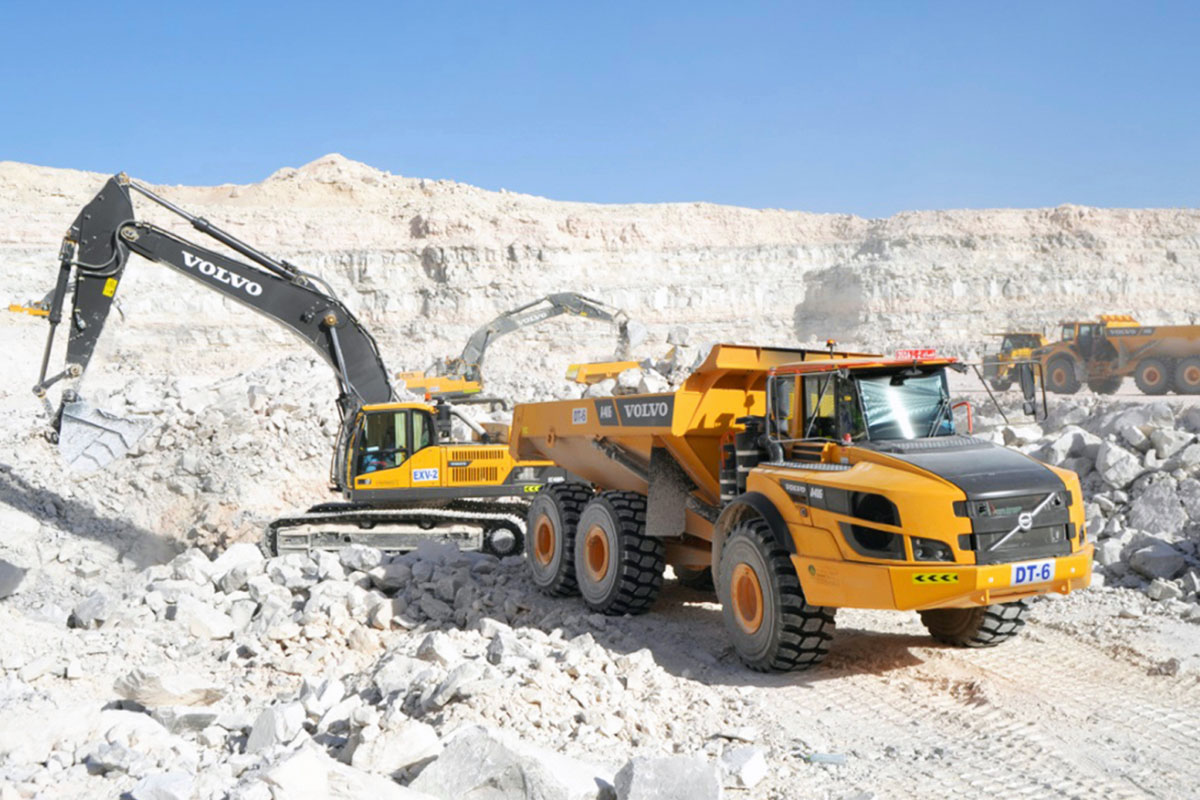
Gypsum begins with geology, but its value is proven in production. Egypt’s gypsum formed as ancient saline waters evaporated, leaving mineral-rich sedimentary layers across Sinai and the Gulf of Suez–Red Sea corridor. Origin alone does not decide performance. Purity, host geology, processing conditions and the final specification do. That is where every CarboCore order begins.
Applications are indicative and subject to the selected grade’s chemical composition, particle-size distribution, surface treatment and processing characteristics. CarboCore’s technical team supports customers in selecting the appropriate grade for their formulation and manufacturing process.
Food, feed, pharmaceutical, cosmetic, medical and potable-water applications require separately evaluated and approved grades. Compliance should not be claimed unless the relevant certification and regulatory documentation are available.
| Product | Main mineral | Formula | Supply forms |
|---|---|---|---|
|
Natural gypsum |
Gypsum (calcium sulfate dihydrate) |
CaSO₄·2H₂O |
Boulders, lumps, crushed, powder |
|
Plaster of Paris (POP) |
Calcium sulfate β-hemihydrate |
CaSO₄·½H₂O |
Powder |
| Grade | CaSO₄·2H₂O min | Typical applications |
|---|---|---|
|
CCNG95 |
95.0 % |
Plaster and board production, ceramics, fillers, white cement |
|
CCNG90 |
90.0 % |
Cement set retarder, agriculture soil conditioner, construction |
Mass %, on dry basis. Maximum values unless stated.
| Parameter | NG95 | NG90 |
|---|---|---|
|
CaSO₄·2H₂O (min) |
95.0 |
90.0 |
|
Combined water (min) |
19.9 |
18.8 |
|
SO₃ (min) |
44.2 |
41.9 |
|
CaO (min) |
30.9 |
29.3 |
|
MgO |
0.10 |
0.50 |
|
SiO₂ |
0.5 |
2.0 |
|
Al₂O₃ + Fe₂O₃ |
0.25 |
1.0 |
|
Chloride (Cl) |
0.01 |
0.02 |
|
Acid insoluble residue |
1.0 |
4.0 |
|
Free moisture |
1.0 |
2.0 |
|
Whiteness, powder (min) |
90 |
— |
Combined water, SO₃ and CaO follow the CaSO₄·2H₂O content (pure gypsum: 20.9 % combined water, 46.5 % SO₃, 32.6 % CaO).
| Form | Size | Typical use |
|---|---|---|
|
Boulders |
Up to 500 mm |
Calcining plants, crushing |
|
Lumps |
50 – 150 mm |
Calcining plants |
|
Crushed |
10–50 mm |
Cement set retarder |
|
Crushed |
0–30 mm |
Cement set retarder, construction |
|
Powder |
Residue on 100 µm ≤ 10 % |
Agriculture, fillers, ceramics |
Other size ranges on request.
| Grade | CaSO₄·½H₂O min | Typical applications |
|---|---|---|
|
CCPOP-P |
93.0 % |
Ceramic and casting moulds, decorative cornices and ceiling ornaments, art and model making |
|
CCPOP-S |
85.0 % |
Building and wall plaster, gypsum boards and ceiling tiles, plaster blocks, repair work |
Mass %, on dry basis. Maximum values unless stated.
| Parameter | POP-P | POP-S |
|---|---|---|
|
CaSO₄·½H₂O (min) |
93.0 |
85.0 |
|
Combined water |
5.8 – 6.5 |
5.3 – 6.5 |
|
SO₃ (min) |
51.3 |
46.9 |
|
CaO (min) |
35.9 |
32.8 |
|
MgO |
0.10 |
0.50 |
|
Chloride (Cl) |
0.01 |
0.02 |
|
Acid insoluble residue |
1.0 |
3.0 |
|
Free moisture |
0.5 |
1.0 |
Pure hemihydrate contains 6.2 % combined water, 55.2 % SO₃ and 38.6 % CaO.
| Property | POP-P | POP-S |
|---|---|---|
|
Whiteness (min) |
92 |
85 |
|
Residue on 200 µm |
≤ 0.5 % |
≤ 2 % |
|
Residue on 100 µm |
≤ 5 % |
≤ 10 % |
|
Water / plaster ratio (ml per 100 g) |
65 – 75 |
60 – 75 |
|
Initial setting time |
10 – 20 min |
8 – 25 min |
|
Compressive strength, dry (min) |
5.0 MPa |
3.0 MPa |
|
pH |
6.5 – 8.0 |
6.5 – 8.0 |
Setting time can be adjusted for the application on request.
| Property | Natural Gypsum | Plaster of Paris |
|---|---|---|
|
CAS number |
10101-41-4 |
26499-65-0 |
|
Colour |
White to off-white |
White |
|
Specific gravity |
2.3 |
2.6 – 2.7 |
|
Loose bulk density |
1.2–1.4 t/m³ (crushed) |
0.7 – 0.9 t/m³ |
|
Hardness (Mohs) |
2 |
— |
Rock and lumps: Specify minimum and maximum size, with acceptable fines and oversize.
Ground material: Specify sieve residue or particle-size distribution.
Free moisture: Establish a separate acceptance limit; chemically combined water is part of gypsum’s mineral structure.
Whiteness: Confirm the required value and measurement method for appearance-sensitive applications.
Natural gypsum requires appropriate processing for plaster and board manufacture. Finished calcined plaster needs a separate specification, including setting and strength performance.
Request the Technical Data Sheet (TDS), Safety Data Sheet (SDS), and batch-specific Certificate of Analysis (COA) for the selected material.
Technical approval should confirm purity, sulphate content, impurities, free moisture, and sizing. The COA should identify the batch and distinguish tested results from specification limits.
Technical Data Sheet
Safety Data Sheet
Certificate of Analysis (batch-specific)
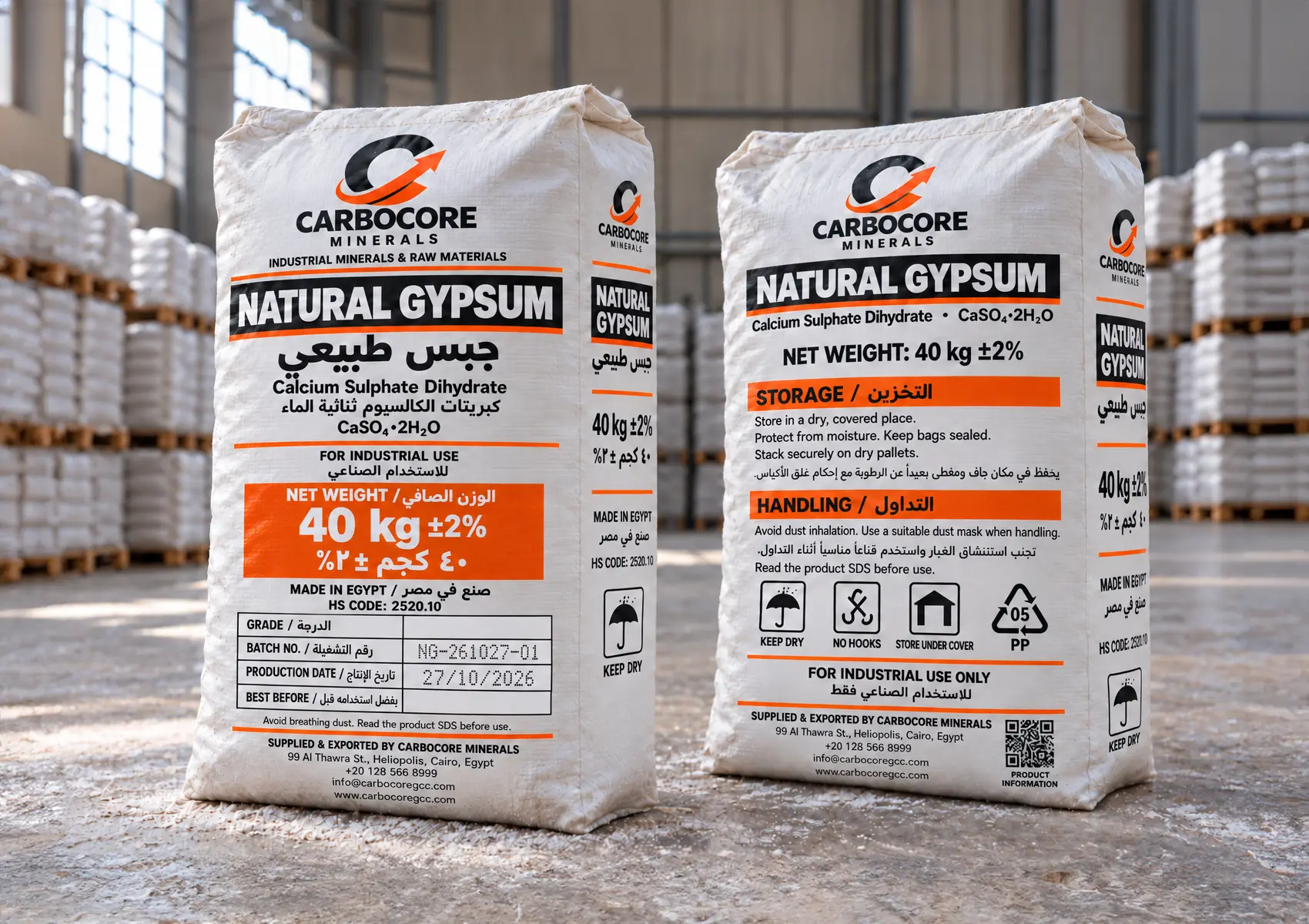
Specify bulk or bagged delivery when requesting a quotation. Packaging, net weight, loading quantity, and shipment arrangements are confirmed according to material size, order volume, and destination.
Store under cover, protected from contamination and uncontrolled moisture exposure.
What you make and which properties matter most.
Matched to your process, not to a catalogue.
Specification, packaging and shipment terms defined upfront.
One point of contact until it reaches your port.
Your application guides the selection, then we propose a product.
Chemistry, physical characteristics and processing behaviour are considered together, not a single purity figure.
Requirements are defined before the offer, so technical and commercial evaluation is straightforward.
Egyptian supply, product selection and export coordination, handled together.
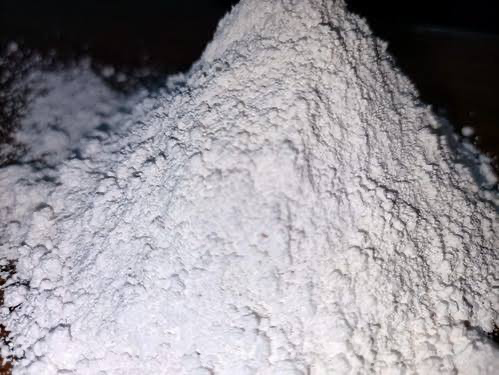
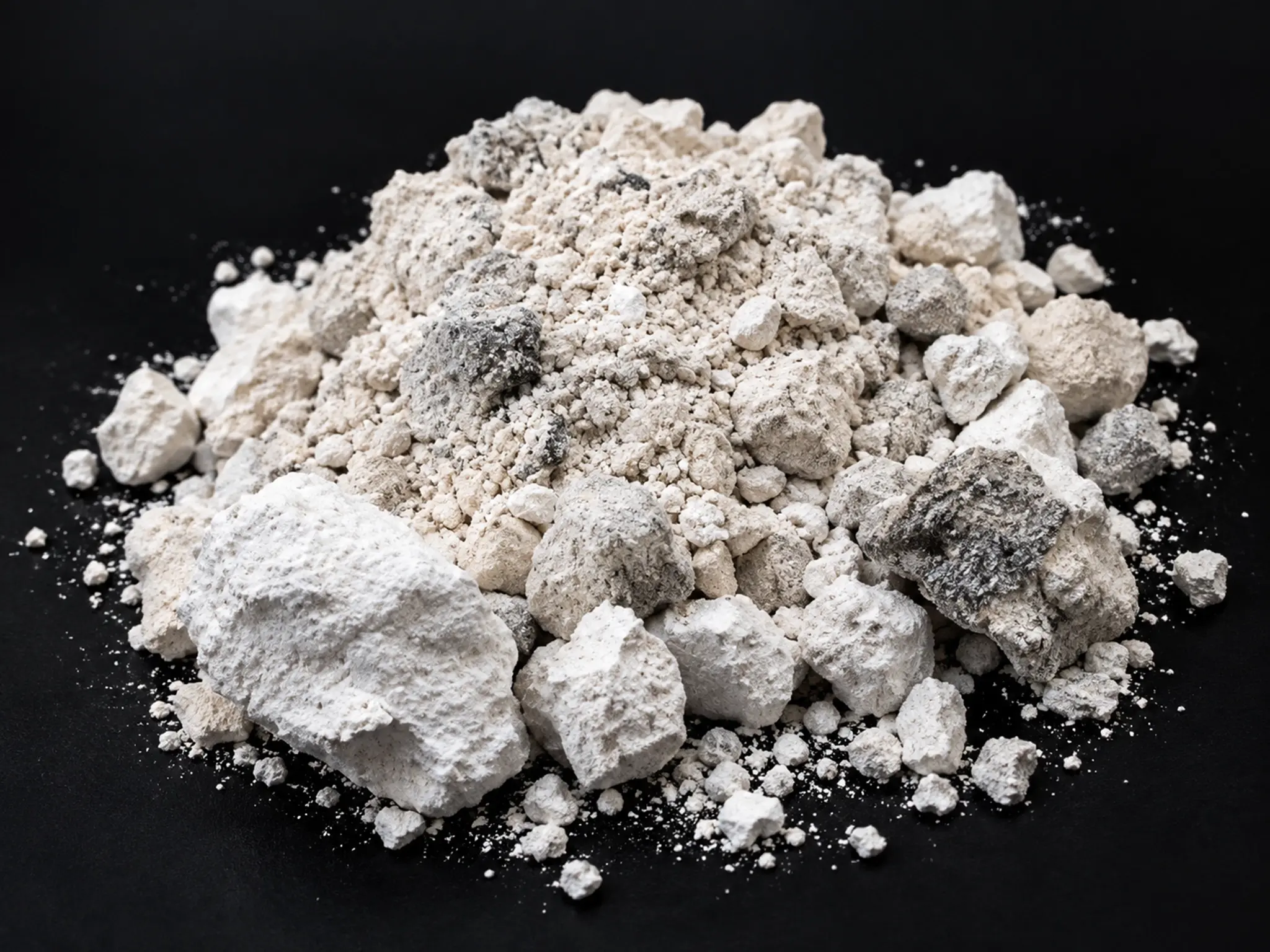
Natural gypsum keeps its chemically bound water. It is the mineral raw material for cement, plaster production and suitable agricultural uses.
Price per tonne is only the start. Purity, sulphate contribution, moisture and compatibility with your formulation decide whether a grade fits.
Heating removes part of the bound water and creates a reactive binder that sets when mixed with water.
Whiteness and fineness are not the full story. Calcination conditions, particle characteristics and formulation shape water demand, working time, strength and dimensional stability.
Different requirements deserve different specifications. Tell us yours.
| If you produce… | Your priority is… |
|---|---|
| Cement | Consistent purity, sulphate contribution and controlled moisture |
| Plaster and gypsum products | A stable raw material for reliable calcination |
| Decorative casting | Fine detail reproduction and handling strength |
| Wall plaster | Suitable working time and smooth application |
| Ceramic moulds | Controlled absorption and durability |
| Agriculture | Suitability for the intended use |
TECHNICAL DATA
| PRODUCT | MAIN MINERAL | FORMULA | SUPPLY FORMS |
|---|---|---|---|
| Natural Gypsum | Gypsum | CaSO₄·2H₂O | Rock / Lumps / Powder |
| Parameter | Reference Value | Buyer Review Note |
|---|---|---|
| Combined Water | 19.90% min | Natural mineral composition and gypsum evaluation. |
| CaSO₄·2H₂O | 94.5% min | Main gypsum mineral content for industrial review. |
| CaO | 30.50–33.0% | Relevant to cement, plaster and construction uses. |
| SO₃ | 44.0–46.0% | Relevant to gypsum and cement-industry assessment. |
| MgO | 0.10% max | Controlled impurity reference value. |
| Al₂O₃ + Fe₂O₃ | 0.25% max | Combined impurity reference value. |
| Chloride (Cl) | 0.008% max | Chloride value for buyer review. |
| Acid Insoluble Residue | 1.00% max | Industrial-suitability screening parameter. |
| Purity | 92.00% min | Commercial reference; confirm test basis and current COA. |
| Whiteness | 94.00 | Relevant to selected plaster and construction applications. |
| Moisture | 0.03% max | Important for packing, storage and handling. |
For the Gulf, Saudi Arabia, India, Pakistan, Bangladesh, East Africa and the Far East.
For Europe, Turkey, North Africa and Russia.
Send us your application, target specifications and destination port.
Please fill in your details to download our full company profile PDF.
Thank you! Your download will begin automatically.
Fill in your details and we'll respond within 24 hours.
Thank you, .
Our team will get back to you within 24 hours.
WhatsApp us